The Ultimate Balinese Street Food Guide: Traditional Fire & Earth Cooking
Discovering the Roots of Flavor: A Balinese Street Food Guide
There is a profound magic that happens when food meets fire, especially in a place like Bali, Indonesia. Here at Cooking From The Ground Up, we are constantly seeking the intersection of tradition, foraged ingredients, and the primal art of Indonesian fire cooking. Bali isn’t just a tropical paradise; it is a masterclass in how to use every part of the land—from the coconut trees to the beehives—to create flavors that are as complex as they are ancient. In this Balinese street food guide, we’re going beyond the tourist cafes to the legendary local warungs where the smoke of coconut husks fills the air and the recipes have been guarded for generations.
Traditional Balinese cooking is a sensory explosion. It’s a cuisine built on the Base Gede—a foundational spice paste containing galangal, turmeric, ginger, and chilies—and a commitment to techniques that haven't changed in centuries. Whether it’s the slow-roasting of a whole pig or the flash-grilling of satay over screaming hot coals, every bite tells a story of the island’s rich volcanic soil and its surrounding seas. Let’s dive into the most iconic dishes and the traditional methods that make them possible.
The Rare Art of Lawar: Foraged Beehives and Roasted Coconut
Our journey begins in Sanur, at the legendary Warung Men Weti. If you want to understand the Balinese philosophy of balance, you must start with Nasi Bali. This isn't just a plate of food; it's a curated collection of textures and tastes, and understanding the complex Lawar recipe ingredients found at Men Weti is essential for any food traveler.
What is Lawar?
Lawar is a traditional Balinese relish, typically made from a mix of vegetables, coconut, and minced meat, all bound together with rich spices. However, the version found at Men Weti is a rare delicacy: Beehive Lawar. In a world where ingredients are often homogenized, finding a dish that uses the actual honeycomb and bee larvae is a reminder of our connection to the ground. The hive provides an earthy, slightly sweet undertone that contrasts beautifully with the crunch of old, roasted coconut.
The complexity of this breakfast plate is rounded out by three distinct types of sambal: a fiery red sambal, a savory fried version, and a raw shallot-based Sambal Matah. Add in the slight bitterness of bitter melon, and you have every taste bud activated simultaneously. It’s a high-vibration meal that proves breakfast in Bali is anything but boring.
Mastering the Broth: The Cooling Secrets of Warung Mak Beng
Walking down the beach in Sanur leads you to Warung Mak Beng, a place that has achieved legendary status for one reason: they do one thing, and they do it better than anyone else. Since 1941, they have served a simple set menu specializing in the famous Warung Mak Beng fish soup, fried fish, and rice.
The Chemistry of Fish Head Soup
For the outdoor cook, the fish head soup here is a lesson in broth management. While it features the classic yellow hue of turmeric and the aromatic punch of fried garlic and shallots, the secret ingredient is cucumber. While it seems counterintuitive to add a watery vegetable to a hot soup, the cucumber provides a "cooling" property that balances the heat of the spices and the richness of the fish oils. It creates a broth that feels light and refreshing even in the humid Balinese heat.
Fried to Perfection
The accompanying fried fish (often King Mackerel) is a testament to heat control. Despite being deep-fried to a golden, crispy exterior, the flesh remains incredibly moist and fatty. It’s served with a sambal that features a hint of sweetness and a heavy dose of local citrus, cutting through the omega fats of the fish. This is "ground-up" cooking at its finest—simple, fresh, and perfectly executed.
Fire and Smoke: The Two Faces of Balinese Satay
No Balinese street food guide is complete without discussing Sate (Satay). In Bali, satay is more than just meat on a stick; it is an exercise in fire fanning and the mastery of Indonesian fire cooking. We visited two distinct locations to see how technique changes flavor and how traditional Balinese cooking varies by region.
Sate Pleching Arjuna: The Chili Powerhouse
Exploring the heat for this Balinese street food guide led us to Denpasar. Sate Pleching Arjuna offers a style of satay that focuses on Pleching—a sambal made with heavy amounts of chili and shrimp paste. Here, the technique is all about intensity. The grill master uses a powerful blower to keep the coals at a white-hot glow, ensuring the beef and pork skewers get a deep char while staying tender inside. The result is a smoky, savory bite that avoids the sweetness common in other Indonesian satays.
Sate Babi Bawah Pohon: The Eternal Grill
In contrast, Sate Babi Bawah Pohon (Pork Satay Under the Tree) in Kuta offers a sweeter, more caramelized experience. The "secret ingredient" here might be the grill itself. These ancient metal troughs have seen decades of dripping fat and sugar-heavy marinades, creating a seasoned surface that adds a unique crust to the meat. The skewers are grilled by the fistful under the shade of a massive mango tree. The sweetness of the Ketchup Manis (sweet soy sauce) caramelizes over the flames, creating a candy-like coating.
Babi Guling: The Pinnacle of Balinese Roast Mastery
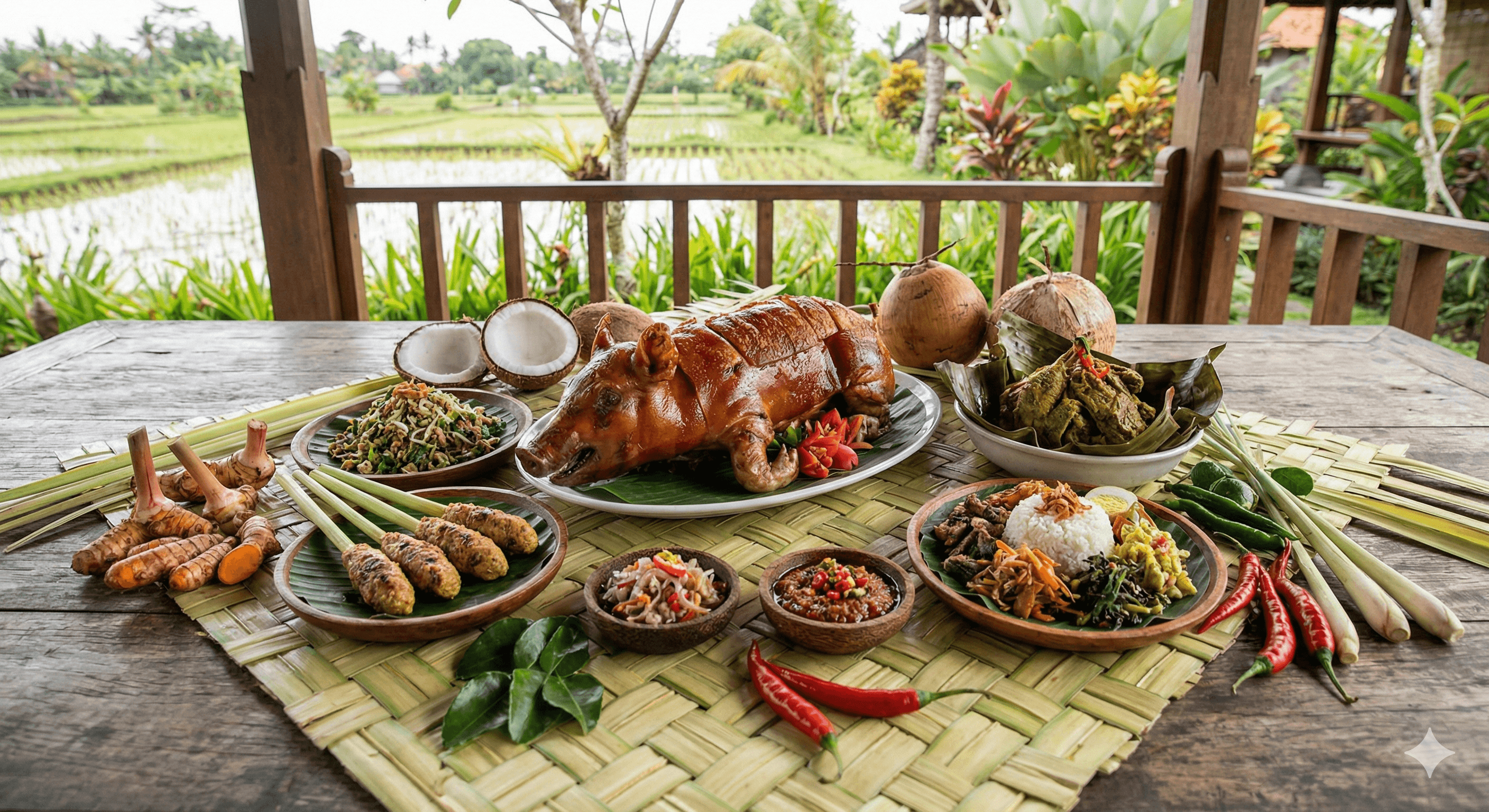
If there is one dish that defines the Balinese culinary identity, it is Babi Guling—spiced, spit-roasted suckling pig. To truly understand this dish for our Balinese street food guide, we must look at the preparation. Unlock the Babi Guling secrets at Pak Malen, where the process is a marathon. The pig is stuffed with a complex mix of Base Gede spices, including lemongrass, kaffir lime leaves, and salam leaves, before being hand-turned over an open fire for hours.
The Anatomy of a Perfect Plate
A true Babi Guling plate is a study in texture. You have the skin, which should be glass-brittle and deeply infused with turmeric. Then there’s the meat, tender and succulent from the slow rendering of fat. But the real pros know to look for the Sambal Goreng—fried chilies and garlic that provide a concentrated punch of flavor. When you mix the crispy pork croutons, the rich lawar, and the spicy sambal into a mound of steamed rice, you are eating the absolute heart of the island.
Freshwater Traditions: Mujayer Nyat-Nyat in Kintamani
For the final stop in our Balinese street food guide, we head to the highlands of Kintamani. Overlooking the farms and the volcanic landscape, Warung Mujayer Pak Bagong specializes in freshwater Tilapia (Mujayer).
The Nyat-Nyat Technique
While the grilled fish (Bakar) is excellent, the Nyat-Nyat style is where the traditional technique shines. The fish is braised in a heavy wok with a thick, chunky herb paste consisting of lemongrass, galangal, and ginger. As the liquid reduces, the spices "climb" into the fish, coating it in a vibrant, nutty curry. The fish is often stuffed with additional spice paste before cooking, ensuring that every flake of meat is saturated with flavor. Served with Kangkung (water spinach) and Sambal Matah, it is a rustic, earthy meal that perfectly represents the highland agricultural spirit of Bali.
Actionable Tips for Recreating Balinese Flavors at Home
- Embrace the Mortar and Pestle: To get the authentic texture of Balinese spice pastes, skip the food processor. Pounding the galangal and turmeric releases oils in a way that blades simply cannot match.
- The Power of the Blower: If you are grilling at home, use a hand fan or a small blower to increase the oxygen to your charcoal. This creates the intense heat necessary for that signature Balinese char.
- Don't Fear the Funk: Ingredients like Terasi (shrimp paste) can be pungent, but they provide the essential savory backbone (umami) that defines Indonesian cuisine. Toast it slightly before adding it to your sambals.
- The Cooling Element: Next time you make a spicy seafood soup, try adding thick slices of deseeded cucumber in the last five minutes of cooking. It’s a game-changer for flavor balance.
Conclusion: Cooking Close to the Ground
As this Balinese street food guide has shown, Bali reminds us that the best food doesn't come from the most expensive kitchens; it comes from an intimate knowledge of the land and a mastery of the elements. From the foraged beehives of Sanur to the wood-fired pigs of Seminyak, Balinese cuisine is a celebration of the ground we walk on. Whether you're traveling to the island or trying to replicate these flavors in your own backyard, remember that the secret ingredient is always a respect for tradition and a touch of smoke.
Stay tuned to Cooking From The Ground Up as we continue to explore the world’s most authentic outdoor cooking traditions. Until next time, keep your fires hot and your ingredients fresh!
Enjoy the show? Subscribe to the channel!
Follow Cooking From the Ground Up for more documentary-style food adventures from around the world.